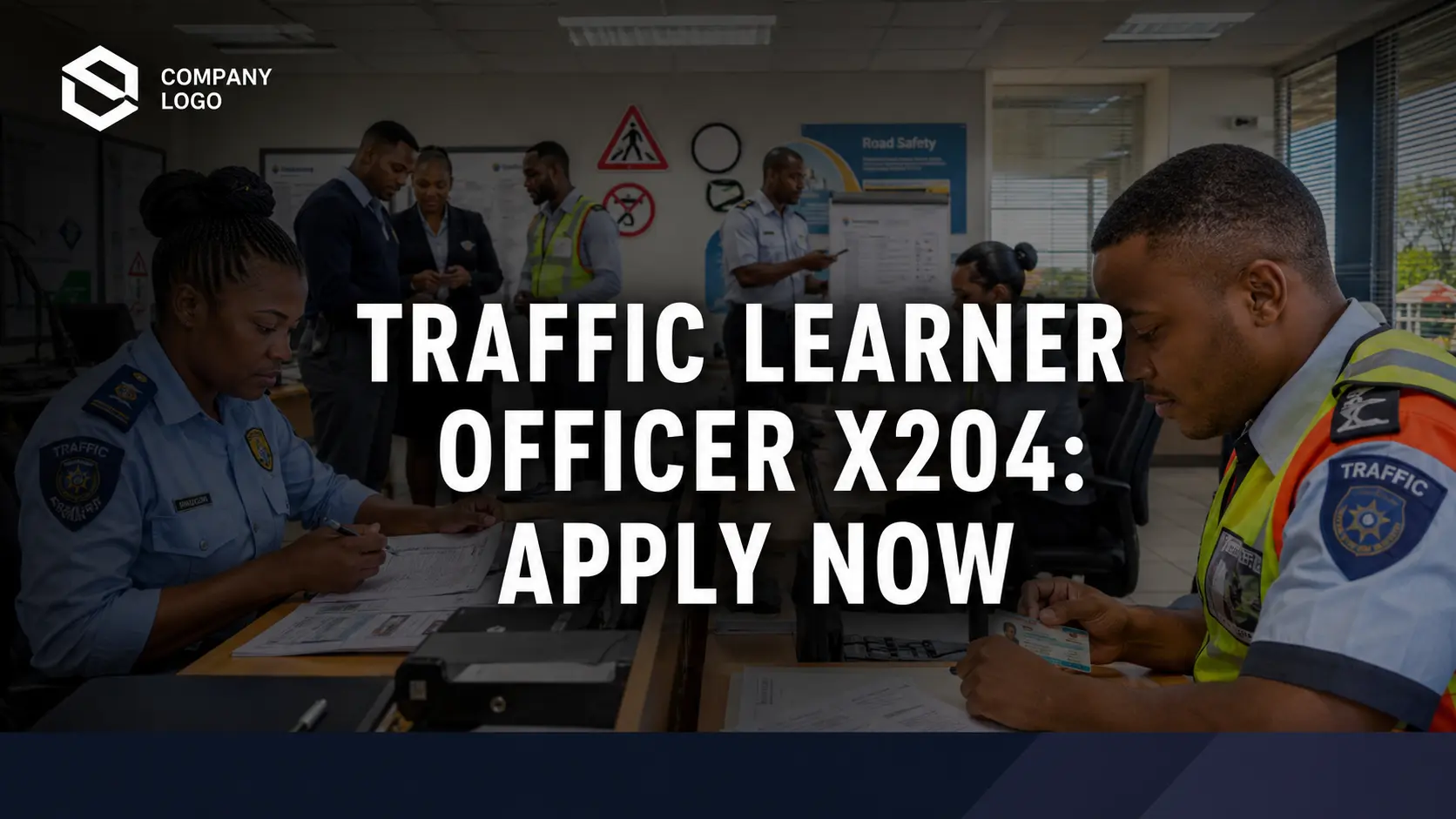
If you’ve come across a Traffic Learner Officer x204 advertisement, you’re probably wondering how to prepare before applications close. Competition for traffic learner officer programmes is usually strong, and being well prepared can help you submit a complete and professional application.
This guide explains what a Traffic Learner Officer programme involves, how to organise your documents, and practical steps you can take before applying. Where official information has not been confirmed, we clearly say so instead of making assumptions.
Table of Contents
Quick Answer
A Traffic Learner Officer programme is designed to train future traffic officers through a combination of classroom learning and practical experience. If an advertisement mentions Traffic Learner Officer x204, it generally indicates that 204 trainee positions have been advertised. Always rely on the official vacancy notice for confirmed requirements, application dates, and instructions.
What Is a Traffic Learner Officer x204 Officer?
Traffic learner officers are individuals receiving formal training to become qualified traffic officers. Their training may include road traffic legislation, law enforcement procedures, road safety education, communication skills, report writing, and practical field experience.
The aim of the programme is to prepare learners for the responsibilities of helping improve road safety and enforcing traffic laws.
What Does “x204” Mean?
In recruitment advertisements, x204 normally refers to the number of available positions—in this case, 204 learner officer posts.
However, it does not confirm:
- Which department is recruiting.
- Where the positions are located.
- The application deadline.
- Salary or stipend information.
- Entry requirements.
Those details should always be verified in the official advertisement.
How to Prepare Your Application
Preparation can make the application process much easier when opportunities open.
1. Update Your CV
Ensure your CV is:
- Up to date.
- Free from spelling mistakes.
- Easy to read.
- No more than two or three pages.
- Accurate and truthful.
Include your education, skills, volunteer work, certificates, and any relevant work experience.
2. Gather Your Documents
Although requirements differ, employers commonly request:
- Certified copy of your South African ID.
- Updated CV.
- Certified Matric certificate (if required).
- Copies of additional qualifications.
- Driver’s licence (where applicable).
- Proof of residence, if requested.
Prepare electronic copies in advance so you can submit your application quickly.
3. Read the Official Advertisement Carefully
Never assume that every recruitment campaign has the same requirements.
Pay attention to:
- Minimum qualifications.
- Required documents.
- Closing date.
- Application method.
- Contact details.
- Selection process.
Following instructions carefully can prevent your application from being rejected.
4. Use Official Recruitment Channels
Traffic learner officer opportunities are generally advertised through official government websites, provincial departments, municipalities, or other authorised recruitment platforms.
Avoid websites or social media accounts asking for payment to secure a job.
Skills That Can Strengthen Your Application
Employers often value applicants who demonstrate:
- Good communication skills.
- Professional behaviour.
- Honesty and integrity.
- Teamwork.
- Problem-solving ability.
- Attention to detail.
- Willingness to learn.
- Ability to work under pressure.
Developing these qualities can improve your competitiveness.
Common Mistakes to Avoid
Many applications are unsuccessful because of simple mistakes, including:
- Missing the closing date.
- Uploading incorrect documents.
- Providing incomplete information.
- Using an outdated CV.
- Ignoring the application instructions.
- Applying without meeting the minimum requirements.
- Paying unofficial recruiters.
Taking a few extra minutes to review your application before submitting it can make a significant difference.
Frequently Asked Questions
Is the application free?
Legitimate government recruitment processes are generally free. Be cautious of anyone requesting payment.
Do I need Matric?
Requirements vary. Check the official vacancy notice for confirmation.
Is there an age limit?
Age requirements differ between employers and should be confirmed in the official advertisement.
Will I receive a salary or stipend?
Only the recruiting authority can confirm whether a salary, stipend, or allowance is offered.
Does completing the programme guarantee employment?
Training programmes do not automatically guarantee permanent employment unless this is specifically stated in the official recruitment notice.
Where to Verify Information
Always rely on official sources, such as:
- National or Provincial Department of Transport.
- Relevant provincial government websites.
- Municipal careers portals.
- Department of Public Service and Administration (DPSA).
- South African Government announcements.
Avoid relying solely on unverified social media posts or forwarded messages.
Final Thoughts
A Traffic Learner Officer programme can be an excellent opportunity for individuals who want to build a career in road safety and public service. The best way to prepare is to keep your CV updated, organise your supporting documents, and monitor official recruitment channels regularly.
When a Traffic Learner Officer x204 opportunity is officially advertised, read every instruction carefully, ensure you meet the stated requirements, and submit your application before the closing date. Applying through the official recruitment process and preparing in advance can improve your chances of success.

Meeta Seta is a skills development and labour market content contributor for the Safety and Security Sector Education and Training Authority (SAS SETA). The author focuses on providing accurate, up-to-date information on learnerships, skills programmes, occupational qualifications, and workforce development initiatives within South Africa’s safety and security sector.
With a strong emphasis on policy-aligned, learner-focused communication, Meeta Seta contributes content that supports informed participation in SETA-funded programmes and promotes access to verified training and employment pathways. All published material prioritises clarity, compliance with national skills development frameworks, and alignment with official SAS SETA objectives.
Through saseta.co.za, Meeta Seta aims to support learners, employers, and training providers with reliable information that strengthens skills development and economic participation.