DCS Learnership 2026 Opens: Powerful Paid Correctional Services Training for South African Youth
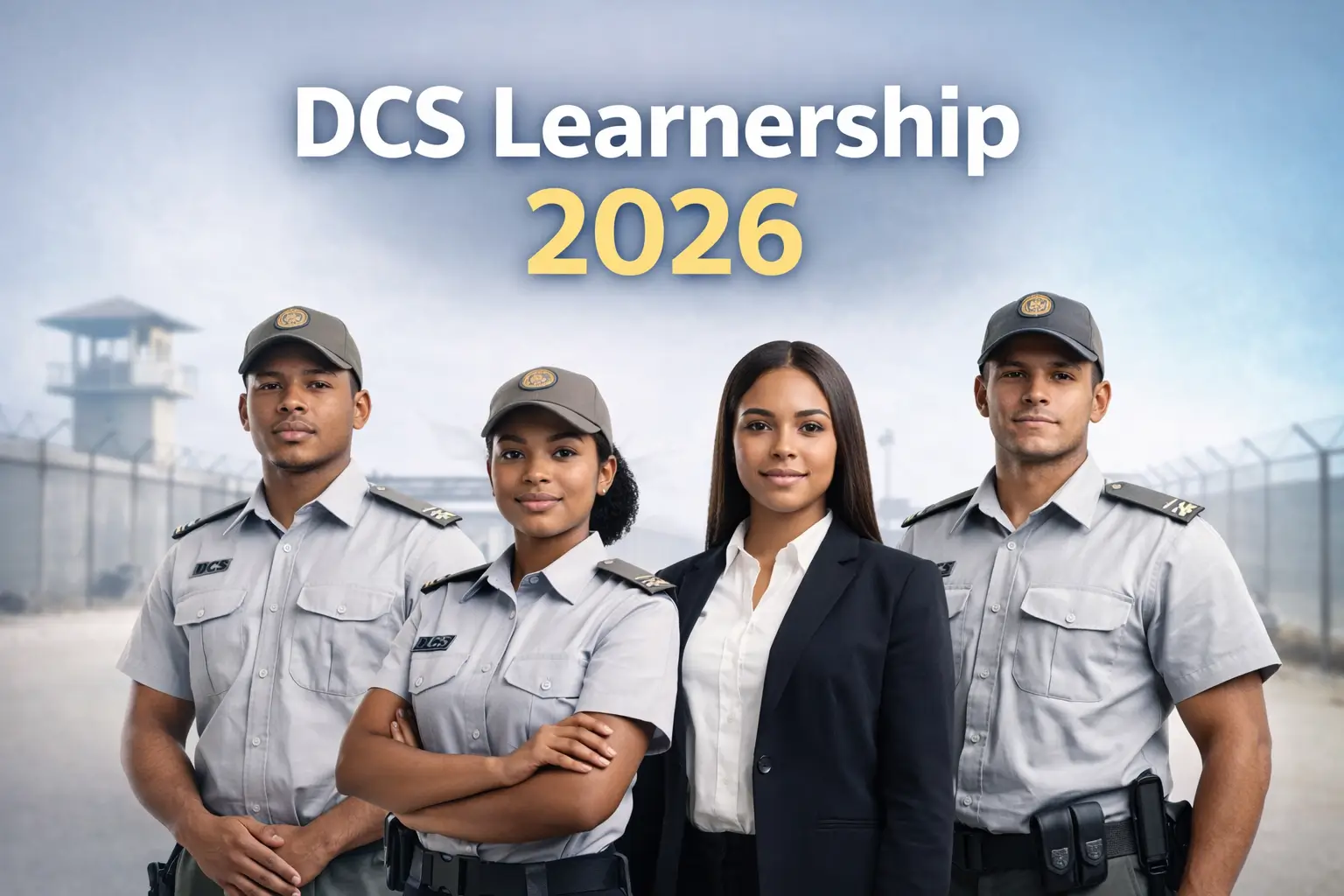
DCS Learnership 2026
The Department of Correctional Services (DCS) has once again opened applications for its 2026 Learnership Programme, offering unemployed South African youth a paid opportunity to gain professional training and work experience in correctional services.
The 12-month DCS Learnership 2026 combines structured classroom learning with hands-on workplace training at correctional centres and community corrections offices across the country. Successful learners will complete both institutional training at DCS colleges and practical placements, preparing them for entry-level roles within the department.
Participants will spend approximately 30% of the programme on theory — including firearm training, physical fitness, self-defence, and correctional services modules — and 70% in workplace learning, where they gain real-world experience managing offenders and supporting rehabilitation programmes.
To qualify, applicants must be South African citizens, aged 21 to 35, with a Grade 12 (Matric) certificate, no criminal record, and a valid driver’s licence. Medical assessments and background checks may apply.
Learners receive a monthly stipend (reported at around R5,500 in some years) and may also benefit from free accommodation, meals, uniforms, and training materials during the theory phase. While employment is not guaranteed, many graduates are considered for roles as Correctional Officials upon completion.
Applications are advertised through official DCS and DPSA channels. Applicants are required to submit a Z83 form, CV, and certified copies of their ID and qualifications before the closing date.
The DCS Learnership continues to play a key role in youth employment, skills development, and public safety, offering young people a structured pathway into government service.
Department of Correctional Services DCS Learnership 2026 in South Africa – Complete 2026 Guide
The Department of Correctional Services DCS Learnership 2026 is one of South Africa’s most respected government training programmes, offering young people a structured pathway into a stable career in public service. For thousands of unemployed youth, this learnership is more than just training — it is an opportunity to gain practical skills, a nationally recognised qualification, a monthly stipend, and potential permanent employment within the correctional system.
If you are between the ages of 21 and 35, have Grade 12, and are passionate about discipline, safety, rehabilitation, and service delivery, the DCS Learnership could be the right opportunity for you.
This comprehensive 2026 guide explains everything you need to know — from programme structure and requirements to benefits, skills developed, and how to apply successfully.
What Is the DCS Learnership?
The DCS Learnership 2026 is a 12-month structured training programme designed to prepare learners for entry-level roles within South Africa’s correctional system. The programme combines classroom-based learning with hands-on workplace experience, ensuring that participants are fully prepared for the realities of correctional services work.
Upon successful completion, learners are awarded a Further Education and Training Certificate (FETC) in Correctional Services, a nationally recognised qualification aligned with South Africa’s skills development framework.
Importantly, this learnership supports the government’s broader goals of:
-
Youth employment
-
Skills development
-
Crime prevention and rehabilitation
-
Strengthening public service capacity
Why the DCS Learnership Is Highly Sought After
Every year, thousands of young South Africans apply for the DCS Learnership — and for good reason:
-
It is fully funded by government
-
It includes a monthly stipend
-
Training is provided at official DCS colleges
-
Learners gain real workplace experience
-
There is a strong chance of employment after completion
Unlike short courses or private training programmes, the DCS Learnership is credible, structured, and recognised nationwide.
Programme Structure & Content
The DCS Learnership runs for 12 months and follows a carefully designed learning model that balances theory with practice.
⏱ Duration
-
12 months (1 year)
📚 Learning Mix
-
30% Theory / Instructional Learning
-
70% Workplace-Based Learning
This approach ensures learners not only understand correctional principles but can also apply them in real-life environments.
1️⃣ Theory Phase (Institutional Training)
The theory phase takes place at Department of Correctional Services training colleges. During this phase, learners receive intensive instruction in both physical and academic modules.
Key areas covered include:
-
Firearm training and handling
-
Physical fitness and endurance training
-
Self-defence techniques
-
Correctional Services legislation
-
Human rights and offender management
-
Ethics and professional conduct
-
Security procedures and risk management
This phase is demanding and requires discipline, commitment, and physical readiness. Learners are expected to meet strict standards, similar to other uniformed services.
2️⃣ Workplace Phase (Practical Training)
After completing institutional training, learners are placed at:
-
Correctional centres, or
-
Community corrections offices
Here, learners gain hands-on experience under supervision, applying what they learned during the theory phase.
Practical exposure includes:
-
Managing offenders
-
Access control and security duties
-
Report writing
-
Conflict resolution
-
Supporting rehabilitation and reintegration programmes
-
Community supervision processes
This real-world experience is critical and forms the largest part of the learnership.
Qualification Outcome
At the end of the programme, successful learners receive a:
🎓 Further Education and Training Certificate (FETC) in Correctional Services
This qualification is:
-
Nationally recognised
-
Aligned with public service standards
-
Valuable for future employment within DCS and related sectors
Key Requirements (General)
Before applying, ensure you meet all minimum requirements. Failure to meet these will result in automatic disqualification.
✅ Minimum Entry Requirements
Applicants must:
-
Be a South African citizen
-
Have a Grade 12 (Matric) certificate
-
Be between 21 and 35 years old at the time of application
-
Have no criminal record
-
(Full disclosure required if a case is pending)
-
-
Be physically and mentally fit
-
Hold a valid driver’s licence (often required and highly advantageous)
Additional checks may include:
-
Medical assessments
-
Physical fitness tests
-
Background verification
-
Security clearance
Who Should Apply?
The DCS Learnership is ideal for individuals who:
-
Are disciplined and committed
-
Can work under pressure
-
Are physically active and resilient
-
Have strong ethical values
-
Want to serve their country
-
Are interested in law enforcement, rehabilitation, or public safety
This programme is not suitable for applicants seeking office-only or purely academic work.
Benefits of the DCS Learnership
One of the biggest advantages of this programme is the support learners receive throughout the year.
💰 Monthly Stipend
-
Learners receive a monthly stipend
-
In some years, this has been around R5,500 per month
-
The stipend helps cover personal expenses during training
⚠️ Stipend amounts may change annually depending on government budgets.
🏠 Accommodation & Meals
During the theory phase, learners often receive:
-
Free accommodation
-
Meals
-
Training uniforms
-
Learning materials
This significantly reduces financial pressure on participants.
🧰 Practical Skills & Work Experience
Learners gain:
-
Real correctional services experience
-
Exposure to professional working environments
-
Skills that are transferable to other security and public service roles
🧑💼 Employment Opportunities
While employment is not guaranteed, many learners:
-
Are absorbed into DCS as Correctional Officials
-
Are placed on internal databases for future vacancies
-
Gain a competitive advantage for government jobs
Key Skills Developed
The DCS Learnership equips learners with both technical and soft skills, including:
🔐 Security & Safety Skills
-
Firearm proficiency
-
Security technology awareness
-
Risk assessment and control
🧠 Interpersonal & Management Skills
-
People management
-
Conflict resolution
-
Communication skills
-
Emotional intelligence
⚖️ Legal & Ethical Knowledge
-
Understanding the Correctional Services Act
-
Human rights compliance
-
Professional ethics
🚀 Service Delivery Skills
-
Innovation in public service
-
Accountability
-
Teamwork
-
Discipline and leadership
How to Apply for the DCS Learnership (Step-by-Step)
Applications for the DCS Learnership are only accepted through official government channels.
📢 Where to Find Vacancies
-
DPSA (Department of Public Service and Administration) vacancy circulars
-
Government newspapers or official announcements
⚠️ Avoid social media scams — DCS does not charge application fees.
📝 Application Documents Required
Applicants are usually required to submit:
-
Completed Z83 application form
-
Updated CV
-
Certified copy of South African ID
-
Certified copy of Matric certificate
-
Certified copy of driver’s licence
-
Any additional certificates (if applicable)
All documents must be:
-
Clearly readable
-
Certified within the required timeframe
-
Submitted before the closing date
Tips to Improve Your Chances of Acceptance
Because competition is high, consider these tips:
✔ Apply early
✔ Double-check documents
✔ Maintain physical fitness
✔ Be honest about background checks
✔ Prepare for interviews and assessments
✔ Follow application instructions exactly
Small mistakes often lead to disqualification.
Common Mistakes to Avoid
❌ Submitting uncertified documents
❌ Missing the closing date
❌ Applying without meeting age requirements
❌ Providing false information
❌ Using outdated Z83 forms
Final Thoughts
The Department of Correctional Services Learnership – DCS Learnership 2026 remains one of the most valuable government opportunities for South African youth who are serious about building a career in public service. It offers structured training, real work experience, financial support, and a recognised qualification — all within a disciplined and professional environment.
If you meet the requirements and are ready for the challenge, the DCS Learnership 2026 can be a life-changing step towards long-term employment and personal growth.

Meeta Seta is a skills development and labour market content contributor for the Safety and Security Sector Education and Training Authority (SAS SETA). The author focuses on providing accurate, up-to-date information on learnerships, skills programmes, occupational qualifications, and workforce development initiatives within South Africa’s safety and security sector.
With a strong emphasis on policy-aligned, learner-focused communication, Meeta Seta contributes content that supports informed participation in SETA-funded programmes and promotes access to verified training and employment pathways. All published material prioritises clarity, compliance with national skills development frameworks, and alignment with official SAS SETA objectives.
Through saseta.co.za, Meeta Seta aims to support learners, employers, and training providers with reliable information that strengthens skills development and economic participation.